The Problem With Heuristics In Investing.
And more random ideas.
I want to discuss this topic of heuristics. Some are helpful, some unhelpful. I’m borrowing a lot of this from Charlie Munger and Nick Sleep. Two investors whom I have tried to apply the philosophy they have in investing.
So heuristics are shortcuts for investors. In my opinion, they prevent investors from doing the good and all-important homework that is necessary to make an educated investment. Obviously, by the price-to-earnings ratio, which is the expectations set by Wall Street, that is what is represented. Often, that is a misconception, but those expectations are usually of the short-term-minded and often based on the intrinsic value, which is a bargain compared to the long term. Just think of the price-to-earnings of Costco in 1994 when Charlie became a board member; I estimate the price-to-earnings was between the mid-20s and low-30s. That’s irrelevant because today it is 50. Now I know that it is not the case every time, but people often look at the p/e and already decide if it is investable, which is a psychological misjudgment.
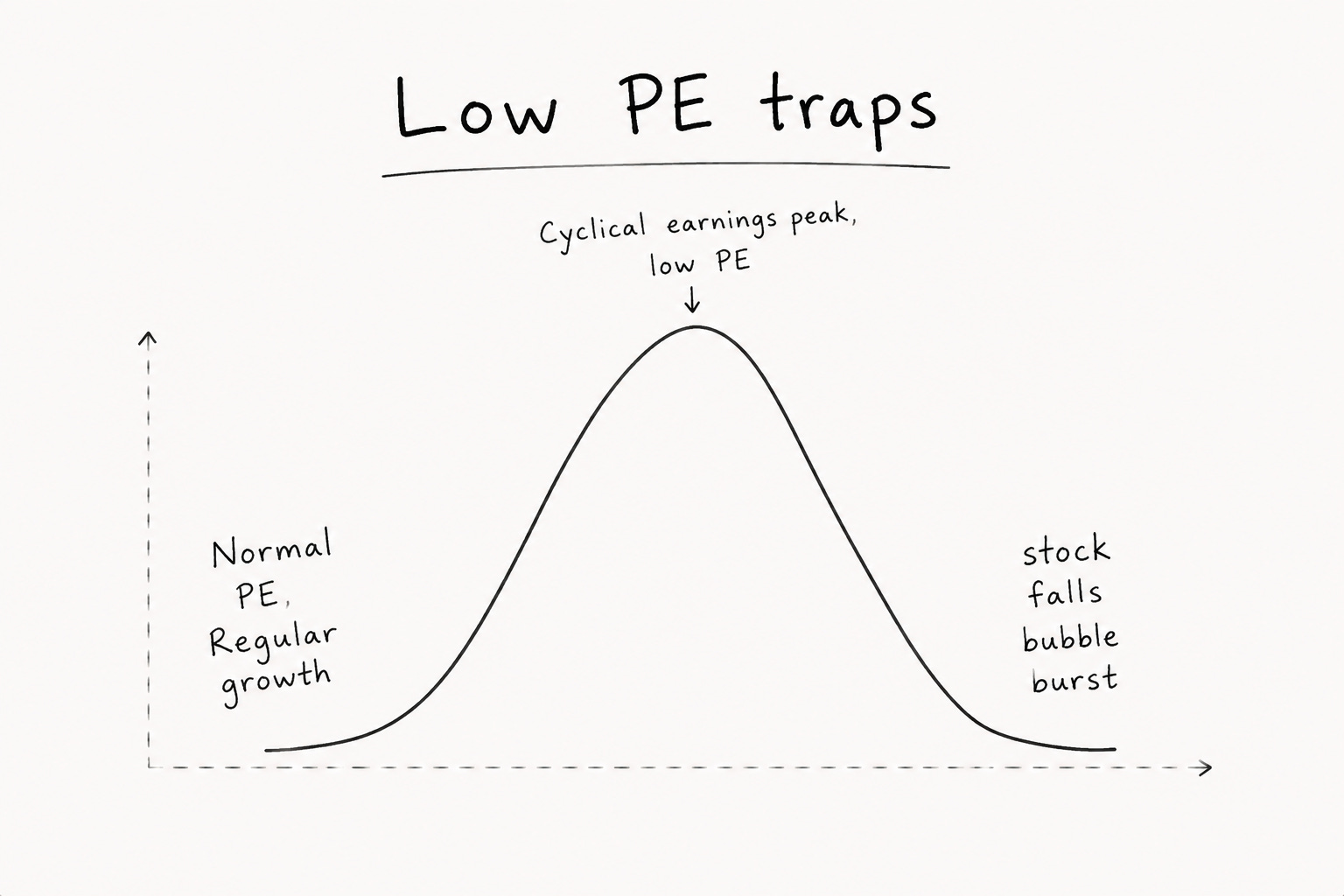
And a counterexample is where there is a low price-to-earnings ratio, such as with many memory stocks today, which people cite as a reason there is not an asset bubble. Yet when earnings are cyclically higher, the price-to-earnings ratio is lowest then. Hence, this becomes the value investor's trap. Price matters, but the size and development of the market and the company’s future strategy matter more.
A second example is capital efficiency returns. Although this heuristic is very helpful, one has to understand the background behind it. Because accounting does not include investments that increase intangible value, this becomes a crucial blindside for companies that have few tangible assets. Let us take Coca-Cola as a great example. If you studied the history of this great company, you would see that they intentionally decided to be asset-light, which focused them on producing syrup and marketing sugared water. Hence, the investments in marketing would increase brand value but not increase ROIC or other such metrics. So while brand value has become one of the most recognizable, the ROIC would not reflect this. Today, because of the acquisitions they make, the ROIC is what it is. And a capital-intensive business may also have high returns on capital, but that also means that less cash is returned to investors. So your ROIC could be high, but if constant reinvestment is necessary, those industry dynamics aren’t ideal.
Overall, every company is unique in its situation; there is no easy playbook or checklist of things you can just pick off and then be done. Rather, you have to take a company that the market has not fully understood. Costco has been understood, so the alpha there is not great. But take Nintendo, for example, a company I wrote about here. Currently being valued similarly to the likes of SEGA, rather, it should be valued more like Disney, since it is becoming a flywheel media company. It’s rather taking a company and predicting where the future cash flows can come from and making a bet.
Originally published on Tech&Media / Substack ↗