Apple Has The Lowest Disruption Risk
Why has Apple stuck around?
Why has Apple stuck around?
Premium brand, yeah yeah. Except a brand that controls the entire experience has a social contract with society for what its brand represents.
Apple has consumer brand willingness to pay, which translates into pricing power, which is why 80%+ of profits in the smartphone industry accrue to Apple. Plus the ecosystem lock-in, on the other hand. They have two kinds of switching costs. So regardless of the new hardware paradigm, consumers have to stay with Apple. Apple is the most valuable technology company because it faces the lowest disruption risk.
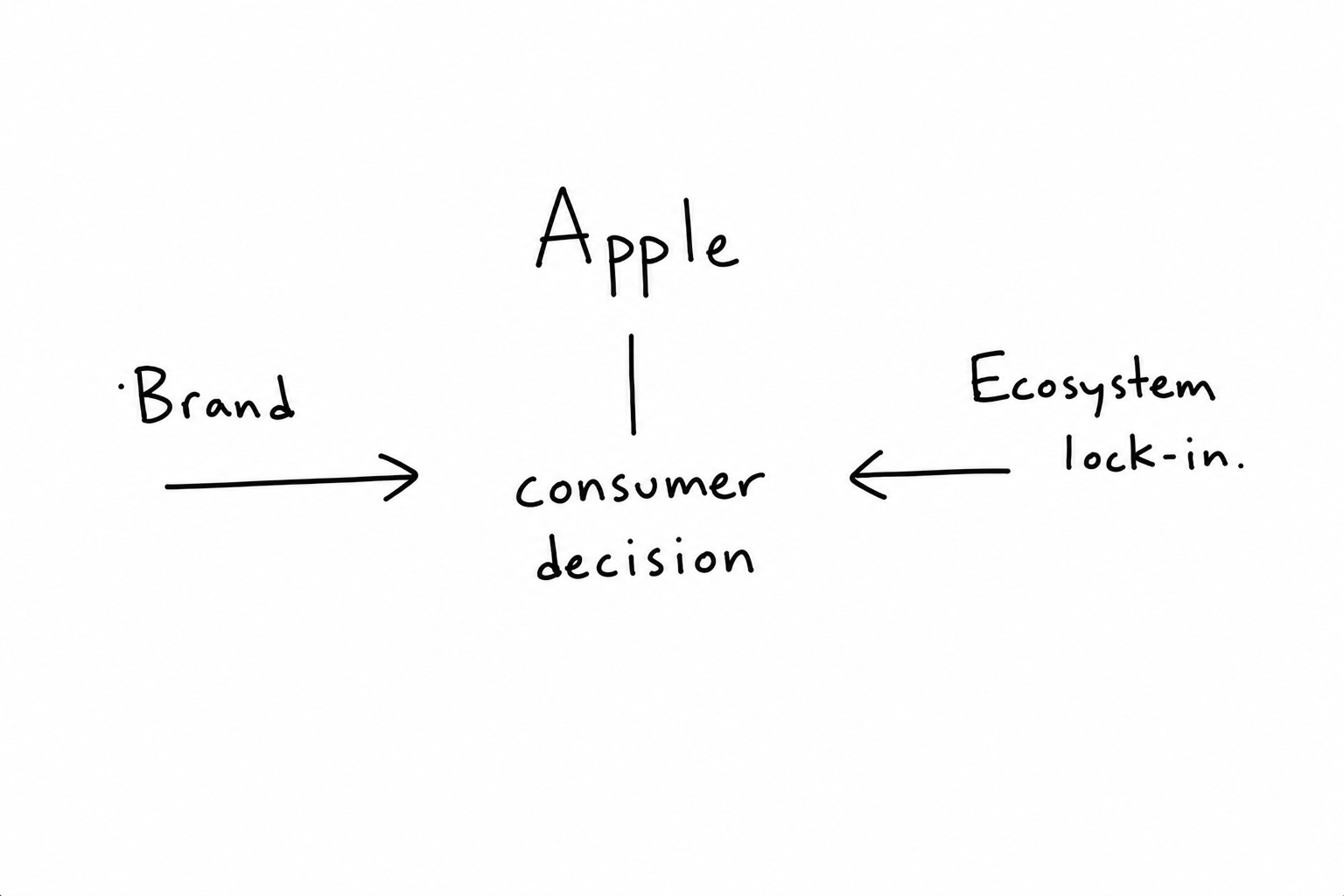
So Apple is a technology company, and the most valuable company in the world as of now. How so? Well, the market cares about the future free cash flows a firm can produce, and the certainty and growth of the cash flows. There is great uncertainty about the current technology investment on which I write here. Apple is not investing in capex the same way Meta, Microsoft, and the other major tech firms are. In the short term, this has done well for the firm’s market value.
The key idea is to understand whether this materially hurt the company in the long run. Apple’s central business model relies on creating premium hardware, with the software best enabled for the vertically integrated hardware. They have a brand that delivers this promise.

Clearly, the iPhone is the hardware cash cow; one might wonder what the future is, perhaps glasses? headsets? Regardless, Apple does not have to be the first; rather, it should not try to be. The first mover advantage in hardware is much more of a liability than in software. Regardless of the next paradigm, the brand Apple has created protects it from disruption, as whatever hardware product it releases, most consumers will purchase it, and developers will create applications for it, almost a engrained network effect.
Apple is unique because it is able to have two high-margin businesses, where usually if a company does have more than one, such as Amazon, one typically sacrifices margin for one business, eg food delivery, to create a high-margin profit center such as an advertising business. Apple has the luxury to charge a high margin on its hardware, as well as layer on additional subscription businesses, which creates customer lock-in.
So, from a strategic perspective, Apple is likely being valued or should be valued in a perspective of low disruption, compared to its peers. It is difficult to see another consumer technology company with the double-sided lock-in Apple has and should continue to have in the future. Despite that, regulation always does lead to the fall of such giants; the app store economics, the vertical integration, and pricing out competition could all lead to some kind of antitrust scrutiny.
Originally published on Tech&Media / Substack ↗